
The 3 Thoughts That Keep NGO Leaders Stuck—And How to Change Them
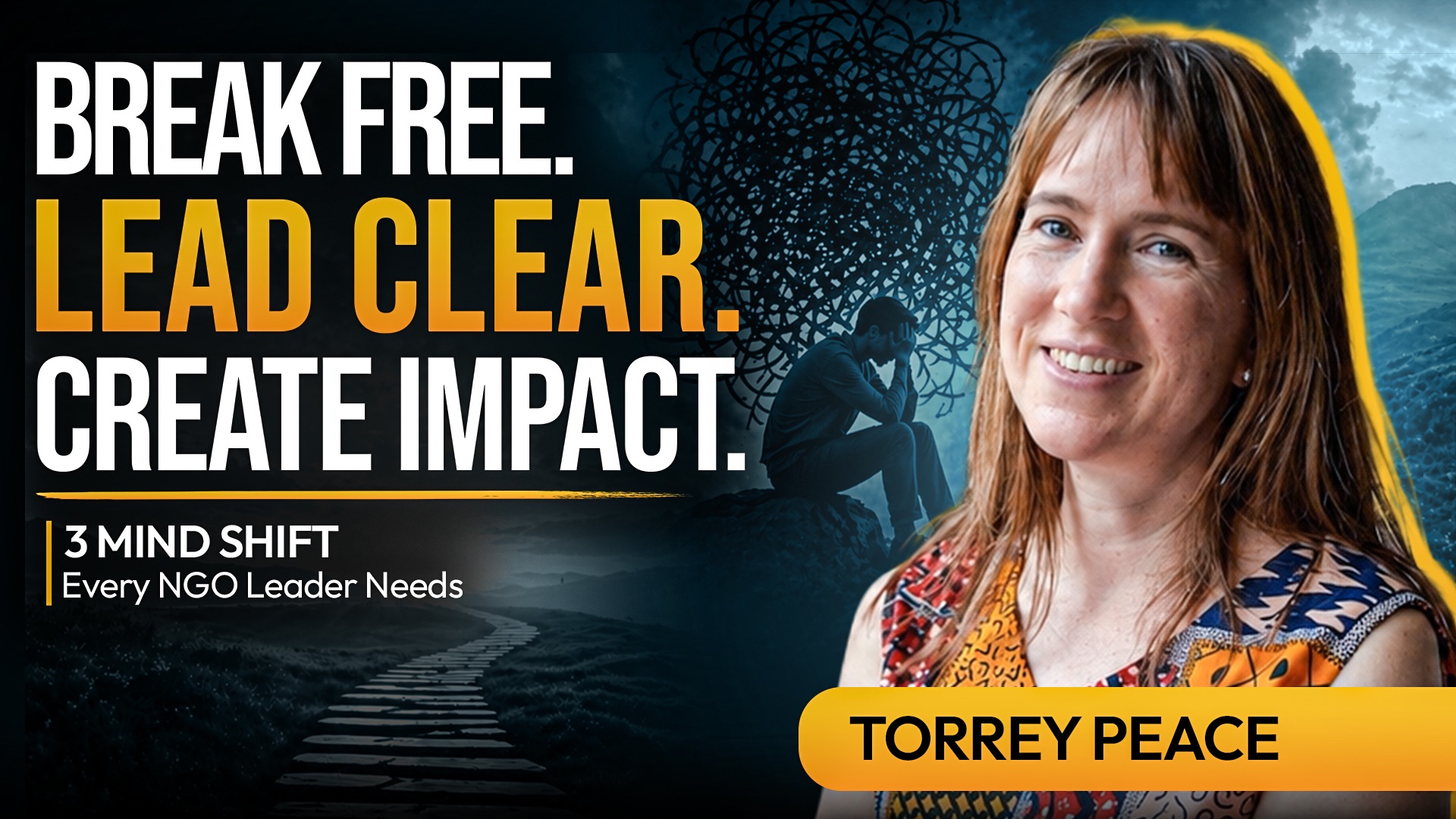
Are you an NGO leader feeling stuck—overthinking decisions, carrying too much responsibility, and wondering if your leadership is creating the impact you hoped for?
Many leaders in the humanitarian and development world are promoted for their technical expertise, but rarely supported in developing the mindset shifts needed for sustainable, people-centered leadership. This often leads to burnout, disengaged teams, and leaders feeling trapped between driving results and protecting their own wellbeing. In this episode, Torrey shares the 3 common thoughts that keep NGO leaders stuck—and how to change them so you can lead with more clarity, confidence, and impact.
By listening you’ll learn:
- The 3 common thought patterns that keep NGO leaders feeling stuck, overwhelmed, and disconnected from their leadership potential
- How people-centered leadership helps you lead stronger, more inclusive teams without sacrificing accountability or results
- Practical mindset shifts to help you step out of overwork and overwhelm so you can lead sustainably and protect your wellbeing
Press play now to discover how shifting these 3 thoughts can help you become the leader your team needs—without burning yourself out.
Watch on YouTube Here
If this episode helped you recognize the thoughts keeping you stuck as a leader, “Becoming the Modern Humanitarian and Development Leader" course will help you turn those insights into practical action.
Designed specifically for humanitarian and development professionals, this course gives you the tools to lead with more confidence, clarity, and wellbeing—without falling into burnout. Visit here to learn more and start building the people-centered leadership skills your team needs.
Full Transcript:
Have you ever noticed how quickly your mind can go to, this is too hard, or I don't know how to do this, or This is not enough and it feels so true? Hi, my name is Torrey and I am the host of the Modern Humanitarian and Development Leader podcast. So this is not an accident that our brains think this way.
We are actually wired that way. It's called negativity bias, which means our brain is constantly scanning our environment for what's going wrong, what could go wrong or what's missing. So this was great from an evolutionary perspective back in the day when we had lions and tigers on the Savannah with us.
But nowadays. Not so helpful. So the other thing is, whenever we're talking about [00:01:00] leadership, these types of thoughts can really get in our way of being able to grow to the type of leader we want to be, so we can make the impact we want. So the way we think about a situation, whether it's negative or positive.
Really drives how we feel about it and how we feel is what drives our actions or our behavior. And so if your thinking is, this is too hard, I don't know how, or this isn't enough, it doesn't just stay in your head. It shapes your decisions, it shapes how you show up with your team, and ultimately it shapes your results.
And I see this all the time with leaders that I work with, especially in the humanitarian and development sector. These thoughts, they seem small and insignificant. In fact, probably most of you don't even [00:02:00] realize when we're thinking them, but they're often the difference between moving forward and staying stuck.
So today I wanna walk you through three common thoughts that I see in the NGO leadership space, which hold leaders back and how you can start shifting them. Now these three thoughts are, is too hard. I don't know how, and it's not enough. And before we go into each one, there's a simple process that I want you to learn first, to be able to overcome them.
So step one is just notice. Notice the thought. A lot of times we don't even realize that we are thinking or saying these things. My students often share them as if they are facts. This is too hard, coaching is too hard, or, managing my time is too hard. But realizing [00:03:00] first that this is just a thought, it's not a fact.
That that is a huge step toward understanding that we have a choice here. We can choose to continue thinking that and believing it, or we can choose to think something different. So first we wanna be aware. Secondly. We can recognize that this is only one way of seeing this perspective or seeing this situation because it's not a fact.
It's just an opinion or an assumption. For example, this is too hard, is an opinion about something, right? Who defines what is too hard? Who defines what is not enough time or not enough. Now, this is important because this is not about blaming yourself for thinking negatively. Your brain is just wired this way.
It's just. Who we are. This is why [00:04:00] we have coaching. This is why coaching is so helpful, because sometimes we're just so wired this way. We don't even realize this, but you can find it in yourself. You can coach yourself through this, and these are the steps I'm giving you now. So once you identify this, then the way you interpret the situation, realizing that there's more than one way, that it doesn't have to be hard, it can be easy.
Is a really big next step. And then step for three is to look for evidence of the opposite. This was where things start to shift because your brain responds to questions. So when you catch yourself thinking this is too hard, ask yourself, how could this be easier than I think? Okay. I don't know how, for example, you can ask yourself, what do I already know?
What's one step I can take? It's not enough. For example, you can ask yourself, where [00:05:00] might there already be enough to move forward? Where is there enough time? Where is there enough funding? And what happens is you start to see that there isn't just one way of looking at the situation. It. Now, this is not just about pretending that everything is easy or just saying, oh, this is easy, and then saying that Now it's easy.
That doesn't make it true. That's toxic positivity, actually. But what we're doing here is because we're so focused on this is hard, our brain automatically looks for evidence for it. So now we're trying to build belief of the opposite so that we can open up our perspective. So let's look at how these thoughts show up in practice and how to overcome them.
It's too hard. This often comes up when you're facing something new. For example, you're learning something new. There's a change in your [00:06:00] organization. There's a difficult conversation you're not used to having or a new leadership responsibility. Then you think this is too hard. So what happens? We avoid, we delay, or we do these things, but with resistance versus when we ask, how could this be easier than I think.
There's suddenly a possibility there, a possibility that this could actually be easy, that maybe I don't have to solve the whole thing, or maybe I just need to take one step. Maybe I can ask for support and suddenly it becomes more manageable. Thought number two, I don't know how, this is a big one for leaders, especially in uncertain environments.
I don't know how to lead through this or I don't know how to support my team. And when you believe that thought, you stop looking for solutions, [00:07:00] you become a victim rather than someone taking responsibility like we talked about last week. So when you shift to what do I already know or what could I try or where could I find the answer, then you move from I can't to, I am figuring it out.
And that shift alone changes how you lead. Number three, it's not enough. This shows up everywhere. Not enough time, not enough funding, not enough staff. And again, these constraints can be real and we can definitely prove them real to ourselves. But when the thought comes, it's not enough. I often it will lead to frustration, shut down, or even an action.
Uh, but when you ask yourself instead, where might there be enough to take the next step, you move into possibility. You start using what you do have [00:08:00] instead of focusing only on what's missing. So here's what I wanna leave you with. The next time you catch yourself thinking, this is too hard, I don't know how, or This isn't enough, or some other negative thought that's holding you back.
Pause and remind yourself this is a thought, not a fact. I am choosing to think this and then ask what else could be true? Because that question is where change will really start. And over time, it's what allows you to lead with more clarity, more resilience, and more impact. And if you wanted to go deeper into this work, this is exactly what we focus on in my course, becoming the Modern Humanitarian and Development Leader, where we apply these tools directly to your real leadership challenges.
The course is open now. Go to aid for aider [00:09:00] workers.com/course to learn more information. Links will be in the show notes. Alright, until next week, keep evolving. Bye for now.
This podcast empowers international development and humanitarian NGO UN leaders to achieve high performance teams, fostering diversity, inclusion, and wellbeing, overcoming burnout and overwhelm, while maximizing impact and productivity.