
The #1 Mindset Shift That Makes NGO Leaders Stronger in Uncertain Times
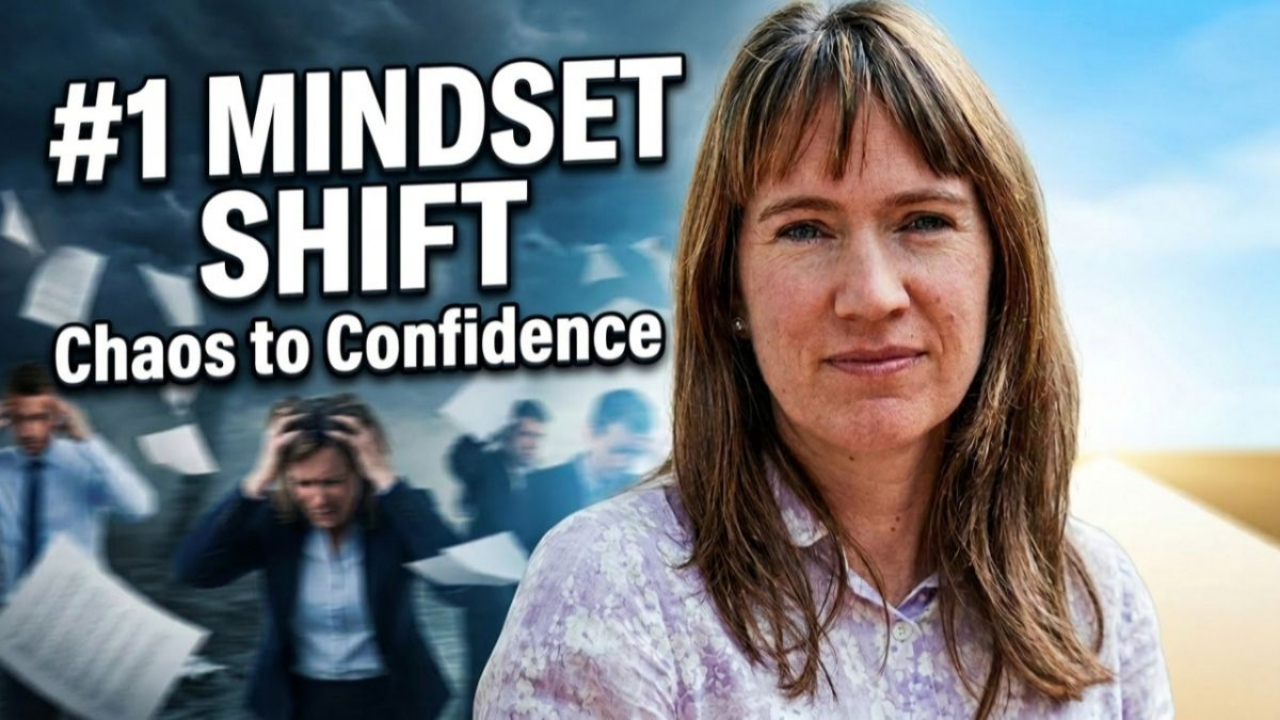
Have you ever made a leadership decision—and then spent hours second-guessing whether you got it right?
In today’s reality of limited resources, constant change, and growing demands, uncertainty can feel overwhelming. You may find yourself overthinking decisions, trying to control every outcome, or putting pressure on yourself to always “get it right.” But instead of building confidence, this often leads to stress, self-doubt, and a heavier leadership load that limits your impact.
In this episode, you’ll learn how to lead with more confidence and ease—even in uncertain environments—by:
- Understanding why trying to control everything actually reduces your effectiveness as a leader
- Shifting your definition of confidence so you can make decisions without constant second-guessing
- Developing a healthier relationship with uncertainty that allows you to stay grounded, clear, and resilient
Press play now to learn how to stop second-guessing your decisions and start leading with confidence—even when nothing feels certain.
Watch on YouTube Here
Ready for more?
If you’re stuck overthinking, controlling, and still feeling like it’s never enough, this episode on High Performance Syndrome will show you exactly why—and how to break the cycle.
Listen now to start leading with more clarity, confidence, and impact.
FULL EPISODE TRANSCRIPT:
The #1 Mindset Shift That Makes NGO Leaders Stronger in Uncertain Times
Torrey: [00:00:00] Have you ever made a decision as a leader and then spent hours second guessing it? Wondering, was that the right call? Should I have done something differently? In normal times, that question is already there. But in the kind of uncertainty that most of us are facing right now- limited resources, growing needs, constant change- that question becomes even louder. Because when everything feels unstable, we start to believe that the way to lead is, well, to get it right. My name is Torrey, and welcome to the Modern Humanitarian and Development Leader podcast. And if you're listening to this, you're probably someone who cares deeply about your work. You wanna make an impact, you hold yourself to a high standard, and you're what I would call a high performer.
But here's what I've noticed. After working with hundreds of NGO [00:01:00] leaders, especially in uncertain environments, the more uncertain things feel, the more leaders try to control them. Control their team, control the quality of the work, control decisions, control outcomes, and even try to control uncertainty itself.
But here's the problem, the more you try to control, the less impact you actually create. Because control doesn't build strong teams. It creates dependency. It keeps you in the center of everything- solving, fixing, deciding, and over time, it leads to something I call, High Performance Syndrome. Where you're working harder than ever, but you're not actually creating the level of impact that you want.
So part of what's driving this is how we think about confidence. Most [00:02:00] leaders think confidence means getting it right, making the right decision, having the right answer, avoiding mistakes, but an uncertainty? That is almost impossible. There is no right decision that you can guarantee. So if your definition of confidence is getting it right, you'll always feel uncertain.
Real confidence and uncertainty is something very different. It's not about knowing what's going to happen or being able to predict it. It's about trusting that you can handle whatever happens, no matter what. And this brings us to a deeper question. What is your relationship with uncertainty?
Because uncertainty itself is not a problem. It's how you experience it. When an uncertainty shows up, do you feel calm or do you feel tension, [00:03:00] pressure, and even dread? Because if your relationship with uncertainty is negative, you're going to try to resist it and make it go away. By controlling more, by overthinking decisions, by doubting yourself and others.
But here's the truth, nothing you will ever do will eliminate uncertainty totally. Because the feeling of uncertainty doesn't come from your environment. It comes from your thinking about it, what you're making it mean. There's a story that I wanna share which illustrates this quite well. A hunter is in the forest with a bow and arrow.
At one point he trips and he accidentally shoots himself in the leg. That's the first pain, the physical pain of the bow and arrow. But, then his mind kicks in. What if I can't walk [00:04:00] anymore, how will I get home? What if my family starves? And suddenly his suffering multiplies. Not because of the wound, but because of the story he's telling himself about all the things that might happen because of it, because of the uncertainty. And this is what we do in uncertainty. We don't just experience it. We often layer it with things like, this shouldn't be happening or I don't know what to do, or this is a problem. And those thoughts are what create the stress, the pressure, and the overwhelm. Not the uncertainty itself. Because the reality is we are always operating in some level of uncertainty.
So what's the alternative? It starts with acceptance, with not giving up, not becoming passive, but recognizing this is the reality I'm in and I don't need to fight it. Because when you [00:05:00] stop resisting uncertainty, you actually reduce the emotional weight of it. You feel less threatened, more grounded, more clear.
And from that place, your leadership shifts. Instead of asking, how do I get this right? You can start asking, given what I know now, what is the best next step? Instead of trying to control everything, you start to build capacity to respond to anything. And this is what makes you a stronger, more resilient leader.
So, here's something to reflect on today: What are you trying to control instead of lead? And what would you need to change if you allowed uncertainty to be there without having to eliminate it? And if you're recognizing yourself in this pattern, if you feel like you're carrying too much, controlling too much, and still [00:06:00] not getting the impact you want, I highly recommend listening to the episode on High Performance Syndrome, which I will link in the show notes, because that's where I break down this pattern more deeply and show you how to shift out of it.
Alright, until next time, keep evolving. Bye for now.